Machine Learning and AI in Biology
Application of deep learning, neural networks, graph models, and AI methods to predict biological properties, classify diseases, and discover patterns in omics data
Overview
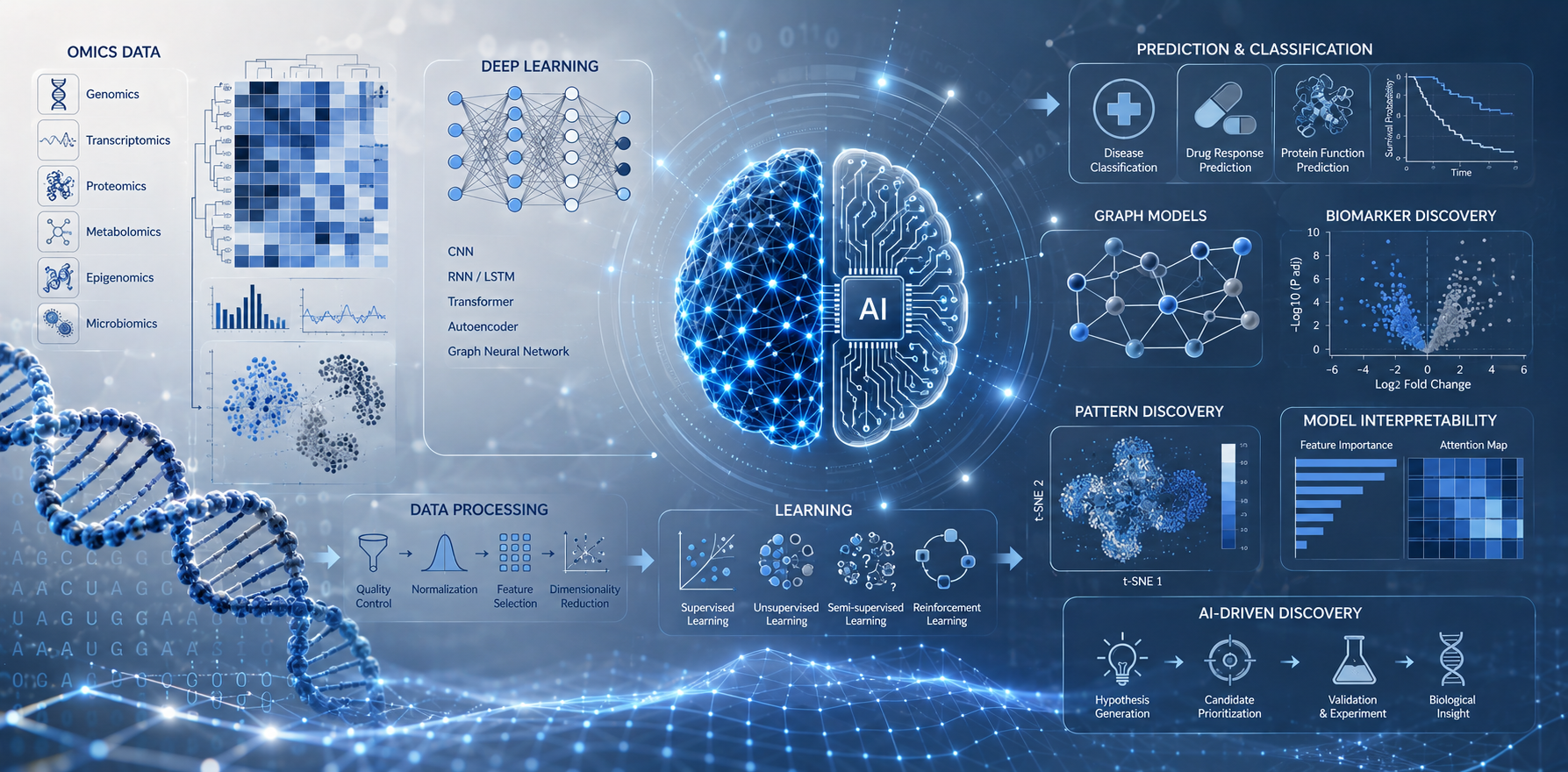
Machine learning has transformed bioinformatics by enabling pattern recognition in high-dimensional biological data. Deep learning models can predict protein function, classify cancer subtypes, and identify regulatory elements with unprecedented accuracy.
Key Topics
- Deep learning for sequence classification (CNNs, RNNs, Transformers)
- Graph neural networks for biological networks
- Generative models for protein design
- Ensemble methods for clinical prediction
- Feature selection in high-dimensional omics data
- Explainable AI (XAI) for biological insights
Applications
- Protein structure and function prediction
- Cancer subtype classification
- Drug response prediction
- Gene regulatory element identification
- Rare disease diagnosis
Faculty in This Area (10)

Associate Professor
Chatchawit Aporntewan, Ph.D.
Department of Mathematics and Computer Science, Faculty of Science

Associate Professor
Duangdao Wichadakul, Ph.D.
Department of Computer Engineering, Faculty of Engineering

Associate Professor
Kitiporn Plaimas, Ph.D.
Department of Mathematics and Computer Science, Faculty of Science

Associate Professor
Krung Sinapiromsaran, Ph.D.
Department of Mathematics and Computer Science, Faculty of Science

Assistant Professor
Naruemon Pratanwanich, Ph.D.
Department of Mathematics and Computer Science, Faculty of Science

Associate Professor
Natapol Pornputtapong, Pharm.D., Ph.D.
Department of Biochemistry and Microbiology, Faculty of Pharmaceutical Sciences

Lecturer
Pasrawin Taechawattananant, Ph.D.

Assistant Professor
Sira Sriswasdi, Ph.D.
Research Division, Faculty of Medicine

Assistant Professor
Tewarit Sarachana, Ph.D.
Department of Clinical Chemistry, Faculty of Allied Health Sciences

Professor
Thantrira Porntaveetus, D.D.S., Ph.D.
Department of Physiology, Faculty of Dentistry